Program
2022 Summer School
2022 Summer School – What are NSERC CREATE TOP-SET Professors up to?
Moderator: Meghan Beattie, University of Ottawa
Have you been wondering about TOP-SET professors’ research? Join us for a lively discussion. We will devote the first 20 minutes to brief presentations by each professor and the last 40 minutes to a round table discussion. Our panel will discuss the research areas of Abderraouf Boucherif, Maxime Darnon, Melike Erol-Kantarci, Karin Hinzer, Jacob Krich, Ray LaPierre and Henry Schriemer. Bring your questions!
2022 Summer School – Annual Challenge
Small teams of two to four undergraduate and graduate students as well as postdoctoral fellows from the University of Ottawa, Université de Sherbrooke and McMaster University will be formed during the Summer School. Over the course of the summer, each team will analyze future prospects for new devices or systems, drawing together science, engineering, and economic analysis. Teams will report back via videoconference in early September and a panel of judges will pick the winning team.
Kickoff: July 18, 2022, 2:15 p.m.
Presentations: September 6, 2022, 1 p.m.
2022 Summer School – Abderraouf Boucherif
July 18, 2022, 3:45 p.m.
In‐Situ TEM observation of Oswald ripening in germanium growth on freestanding graphene and its application to wafer scale layer transfer process (PEELER)
In‐situ High resolution transmission electron microscopy (HR‐TEM) dynamic investigation of the nucleation of germanium islands on free standing graphene allow direct observation of basic phenomenon such as island nucleation, growth and coalescence. The experimental observations demonstrate that nucleation is enhanced by low temperature deposition, and that the coarsening process is dominated by Oswald ripening, this latter phenomenon leads to monocrystalline coalescence when it occurs below a certain critical size.
These basic observations have been applied to mesoporous germanium in order to design and fabricate detachable monocrystalline nanomembranes. We have demonstrated the first wafer scale detachable and flexible germanium nanomembrane through the new so‐called PEELER process, the substrate can be re‐used to produce more nanomembranes in the same fashion as the remote epitaxy process enabling layer separation and transfer for non‐polar group IV‐IV materials. It is shown that this substrate is compatible with MOCVD growth of device quality materials.
Abderraouf Boucherif has been an assistant professor of mechanical engineering at Université de Sherbrooke since 2018. He is the 2020 winner of the Tremplin Prize in Natural science and Engineering. His research is focused on semiconductor nanomaterials for green energy. Leading a multidisciplinary team of more than 20 scientists and students, he is the principal investigator of large-scale research projects in partnership with industry to create new nanomaterial for solar energy applications. Among his major achievements is the demonstration of a process for semiconductor layer transfer and substrate recycling as well as defect free III-V virtual substrate on silicon. He has published more than 70 papers in international peer reviewed journals and received several awards for his outstanding applied research contributions. Here is a link to his detailed CV.
Sustainable photovoltaics technologies
July 18, 2022, 4:15 p.m.
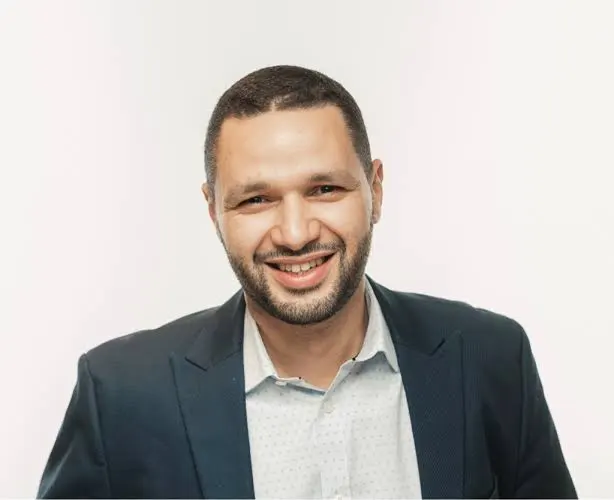
As photovoltaics (PV) becomes a major source of electricity production, new questions emerge about the environmental impact of manufacturing solar modules, the toxicity of the modules, the impact on land and ecosystems during and after system installation, and finally, modules recyclability at end-of-life. Concerns from the public and opposition groups can also create significant delays and costs in project deployments due to the lack of studies on the environmental benefit, toxicity, or end-of-life management of PV. Anticipatory sustainability assessment can evaluate the potential environmental impact of current and future technologies. Results are helpful to address misconceptions about solar impacts and guide greener PV module design, construction, and recycling. Examples of recent projects on transparent photovoltaics for building-integrated PV, tellurium scarcity, modules toxicity, and solar co-location with agriculture will be presented.
Annick Anctil is an associate professor in Civil and Environmental Engineering at Michigan State University, where she leads research on Sustainable Energy Systems. She holds a BE and MS in Materials Engineering and a PhD in Sustainability. The core of her research is evaluating the environmental impact of photovoltaics technologies. She participated in the NSF International Standard on Sustainability Leadership for Photovoltaics Module and the EPEAT Ultra-low carbon solar modules criteria. She is the assistant director of the DOE-MSU Industrial Assessment Center and received an NSF CAREER award in 2021 to work on the impact of the solar photovoltaics industry in the US. She was selected as a Michigan Clean Energy Leader in 2018 and is currently on the board of directors of the Michigan Institute for Energy Innovation (IEI) and Advancing Women in Energy (AWE).

2022 Summer School – Social Event
Roll the dice on social interaction and join us on Monday, July 18, starting at 6:30 p.m., at Level One Game Pub, 14 Waller Street, for dinner, board games and socialization. Learn a new game or share your personal favourites with your fellow summer school attendees over dinner. We will meet in front of the STEM building (near the giant pillars) at 6:15 p.m. and walk there together if you would like a guided tour to the venue.
Cost for this event is not included with summer school registration:
- $9.04 (tax included) to stay and play board games.
- Cost for food and drinks to be added to each individual tab.
- Payment will be made directly to the Level One Game Pub.
Contact Christine Couture for any questions.

Two methods of estimating photovoltaic spectral effects
July 19, 2022, 9 a.m.
Photovoltaic modules are typically rated at Standard Test Conditions that include the AM1.5 reference spectrum. Deviations from AM1.5 can lead to annual gains or losses of up to roughly 3% for crystalline silicon and 10% for amorphous silicon. Ideally, spectral effects would be derived using photovoltaic module spectral responsivity and spectroradiometer data, but this is rarely feasible. Two alternative methods are presented and discussed. The first method is the semiempirical PVSPEC model developed by CanmetENERGY and Canadian Solar, which estimates spectral mismatch factor using clear-sky index and absolute air mass. The second method uses satellite-based spectral irradiance products, namely the National Renewable Energy Laboratory National Solar Radiation Database Spectral on Demand (NSRDB-S) and Satellite Application Facility on Climate Monitoring Spectral Resolved Irradiance (CM-SAF SRI). These methods are developed and tested for six photovoltaic module technologies using spectroradiometer and meteorological data at seven ground stations.
Sophie Pelland received a Ph.D. in theoretical particle physics from Cornell University in 2001. She worked as a Senior Solar Energy Assessment Analyst at Vaisala from 2015 to 2018, where she performed probabilistic modeling of the energy yield of utility-scale photovoltaic (PV) plants worldwide and lead Vaisala’s R&D in this field. She was a Research Officer at CanmetENERGY from 2005 to 2014, and rejoined CanmetENERGY in 2018 as a Physical Sciences Specialist in the Renewable Energy Integration group. Her research interests include PV system performance and modeling, solar resources, and renewable energy integration into electricity grids.
Dr. Pelland is the Canadian representative to the International Energy Agency Photovoltaic Systems Programme Task 16 on “Solar Resource for High Penetration and Large Scale Applications”. She is also part of the Canadian committee developing international standards on non-concentrating, terrestrial photovoltaic modules within the International Electrotechnical Commission Technical Committee 82 Working Group 2.
2022 Summer School – Monica Gattinger
July 19, 2022, 9:30 a.m.
Public confidence in government decision-making for energy and climate: A crucial ingredient for emissions reductions success
Canada is at a pivotal moment on energy and climate: there is far greater consensus among the public, industry, governments and experts about the need to reduce emissions, and there are myriad opportunities for Canadian energy of all types in domestic and international markets. Much energy and climate progress has been made, but there is much to be done to move successfully from the ‘what’ to the ‘how’ of emissions reductions, including for renewable energies like photovoltaics. Drawing on research and engagement at the University of Ottawa’s Positive Energy program in recent years, this talk will highlight four key obstacles and challenges Canada needs to address to be successful in its emissions reductions efforts: getting infrastructure financed, permitted and built, and technology developed and deployed; ensuring energy is affordable and reliable; building consensus among the public and experts for Canada’s energy and climate future; fostering intergovernmental collaboration and navigating partisan polarization.
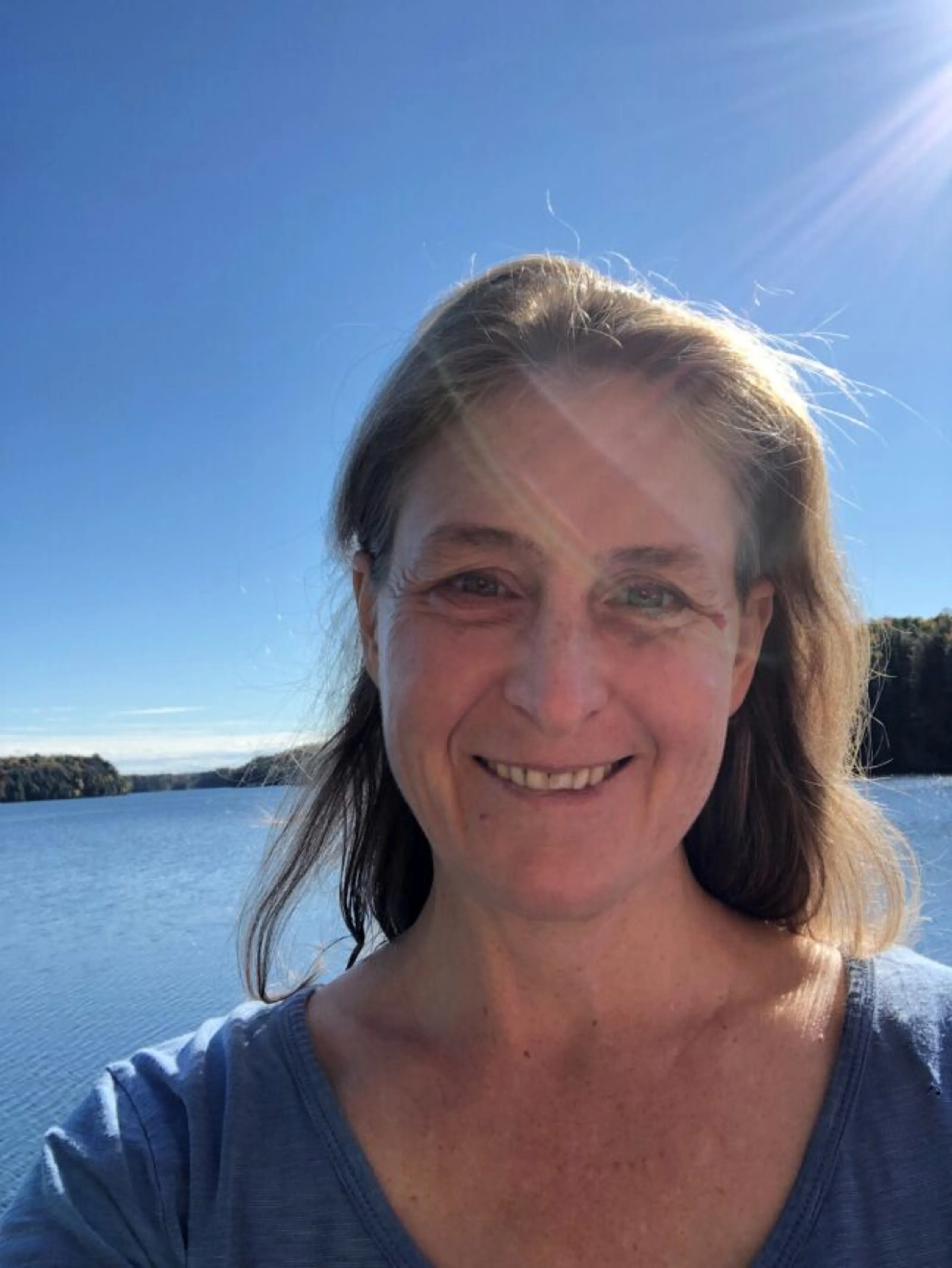
Monica Gattinger is Director of the Institute for Science, Society and Policy, Full Professor at the School of Political Studies and Founder/Chair of Positive Energy at the University of Ottawa. She is an award-winning researcher and highly sought-after speaker, adviser and media commentator in the energy and arts/cultural policy sectors. Her innovative research programme convenes business, government, Indigenous, civil society and academic leaders to address complex policy, regulatory and governance challenges. She has published widely in the energy and arts/cultural policy fields, with a focus on strengthening decision-making in the context of fast-past technological change and markets, changing social values, and lower levels of trust in governments, industry, science and expertise.
Dr. Gattinger is Fellow at the Canadian Global Affairs Institute, board member of the Clean Resource Innovation Network, and serves on advisory committees for Énergir, the Institute on Governance, the National Research Council Canada, the Nuclear Waste Management Organization, the Ontario Energy Board, the Ottawa Science Policy Network and the University of Calgary. She chairs the Editorial Board of the University of Ottawa Press and is a columnist for JWN Energy’s Daily Oil Bulletin. She received the 2020 Clean50 Award for her thought leadership in the energy sector. She holds a PhD in public policy from Carleton University.

Entrepreneurship in the clean tech sector
July 19, 2022, 10 a.m.
Carla Miner is an Investment Lead at Sustainable Development Technology Canada (SDTC) and is responsible for a diverse and ever-changing portfolio of cleantech companies.
She was awarded a PhD in Physics from the University of Ottawa (1985). At that time, she was a materials scientist at Bell Northern Research (BNR) where her work focused on the growth and characterization of III-V semiconductor materials and devices. It resulted in 11 patents and 75 papers in peer reviewed journals. Her work led to roles of increasing responsibility within BNR-Nortel cumulating in that of Senior Manager, Nortel Networks Optical Components.
Since leaving Nortel she has worked at two start-up companies, Picarro (making diode pumped lasers and cavity ring down spectrometers) and Group IV Semiconductor (developing solid state lighting). At SDTC she continues the start-up life, albeit vicariously, by working with entrepreneurs from across Canada.
2022 Summer School – Student Oral Presentations
July 19, 2022, 11 a.m.
Multi-terminal solar cells fabrication with a wet etching process
Meghan Beattie (1), H. Helmers (2), G. Forcade (1), C. E. Valdivia (1), D. Lackner (2), O. Höhn (2), and K. Hinzer (1)
(1) University of Ottawa (2) Fraunhofer Institute for Solar Energy Systems ISE
Design and fabrication of color-generating nitride based thin-film optical filters for photovoltaic applications
Paramita Bhattacharyya (1), B. Ahammou (1,2), F.Azmi (1), R. Kleiman (1), and P. Mascher (1)
(1) McMaster University (2) Univ Rennes, INSA Rennes, CNRS, Institut FOTON—UMR
Micro-fabrication and transfer of a detachable Ge epitaxial layer grown on porous germanium for PV application
Valentin Daniel, J. Chrétien, G. Hamon, M. de Lafontaine, N. Paupy, Z. O. El Hmaidi, B. Ilahi, T. Hanus, M. Darnon, and A. Boucherif
Université de Sherbrooke
Near-field heat transfer measurements using SiN drumhead nanomechanical resonator
Mathieu Giroux, C. Zhang, N. Snell, G. Mu, M. Stephan, R. St-Gelais, and J. Krich
University of Ottawa
Design of mesoporous germanium bilayers by electrochemical etching
Laurie Mouchel, T. Hanus, J. Arias-Zapata, B. Ilahi, and A. Boucherif
University of Ottawa
Device model for valley photovoltaic systems
Daixi Xia and J. Krich
University of Ottawa
2022 Summer School – Student Poster Presentations
July 19, 2022, 1:30 p.m.
Porous-Ge reconstruction: Thermally induced tuning toward layer transfer and substrate re-use
Ahmed Ayari, B.Ilahi, R. Arvinte, T. Hanus, L. Mouchel, D. Machon, and A. Boucherif
Université de Sherbrooke
Analytical device physics model for the design and fabrication of a nanowire-based betavoltaic device
Amanda Thomas and R. LaPierre
McMaster University
Edge brightening and current mismatch loss in a bifacial photovoltaic test bed
Annie C. J. Russell (1), C. E. Valdivia (1), J. E. Haysom (1,2), and K. Hinzer (1)
(1) University of Ottawa (2) J.L. Richards and Associates Ltd.
Metallization on thin ITO film for heterojunction solar cell
Erwan Thoux, M. Darnon, G. Hamon, and S. Nicolay
Université de Sherbrooke
Mechanical properties of detachable Ge epilayer on reconstructed porous Ge
Firas Zouaghi, A. Ayari, B. Ilahi, J. Chrétien, T. Hanus, N. Paupy, N. Quaegebeur, and A. Boucherif
Université de Sherbrooke
Optical response of highly mismatched alloys
Gavin M. Frodsham and J. Krich
University of Ottawa
Transfer reinforcement learning for joint radio and computation resource allocation in 5G RAN slicing
Hao Zhou and M. Erol-Kantarci
University of Ottawa
GaAs/Ge/Si nanovoided virtual substrate for low-cost III-V solar cells
Henriques Jonathan, A. Heintz, B. Ilahi, R. Ares, A. Boucherif
Université de Sherbrooke
Transient liquid phase metallic bonding for InGaAs active layer epitaxial lift-off for solar cells application
Martina Zanetti, J. Chretien, J.-L. Leclercq, P. Regreny, M. Darnon, and G. Hamon
Université de Sherbrooke
Optimisation de la gestion énergétique des micro-réseaux hybrides photovoltaïque et diesel
Mathieu Blanchard, A. Ali, J. Trovao, and M. Darnon
Université de Sherbrooke
Probabilistic assessment of narrowband vs broadband solar irradiance temporal variability in Ottawa
Nick Anderson (1), V. Tatsiankou (1,2), K. Hinzer (1), R. Beal (2), and H. Schriemer (1)Kleiman
(1) University of Ottawa (2) Spectrafy
Epitaxial growth of detachable III-V materials on mesoporous Ge substrate for layer transfer and substrate reuse
Nicolas Paupy, B. Ilahi, T. Hanuš, V. Daniel, R. Arès, and A. Boucherif
Université de Sherbrooke
Subcell segmentation: Development and evaluation of next-generation, high-efficiency, highly-tunable photovoltaic devices for the renewable energy transition and Industry 4.0
Robert F.H. Hunter (1), C. E. Valdivia (1), L. S. Baribeau (1), A. W. Walker (1,2), and K. Hinzer (1)
(1) University of Ottawa (2) National Research Council Canada
Fabrication of ultrathin Ge template for growth of high-performance III–V optoelectronic devices based on wafer-scale porous Ge
Tadeáš Hanuš, B. Ilahi, J. Arias−Zapata, P.-O. Provost, A. Chapotot, and A. Boucherif
Université de Sherbrooke
The calculation of the attenuation of optical signals transmitted through various weather types and cloud conditions
Victoria Jancowski (1), K. Hinzer (1), and A. Atieh (2)
(1) University of Ottawa (2) Optiwave
2022 Summer School – Yuri Grinberg
July 19, 2022, 3:30 p.m.
Photonic components design: AI opens new avenues
The demand for photonic component miniaturization, increased efficiency and complex functionality requires innovative design approaches. Advances in modeling and computational tools allow physicists and engineers to rely more on numerical methods for design and less on simplified analytical models that are often approximate and limiting. This creates a space for AI and machine learning techniques to assist in the design process by collecting and analyzing data from such models, offering wide ranging benefits.
Several example applications of machine learning to surrogate modeling and optimization developed by different groups will be briefly presented. This will be followed by a more in-depth look at dimensionality reduction methods in design, an approach developed and tested by our group and collaborators. Dimensionality reduction facilitates an efficient exploration of a high-dimensional design space, identifying different performance or merit tradeoffs and the overall limits of the design space. A number of use cases of linear dimensionality reduction in the context of integrated photonics will be discussed, as well as our recent work on leveraging neural-network-based methods demonstrating further improvement.
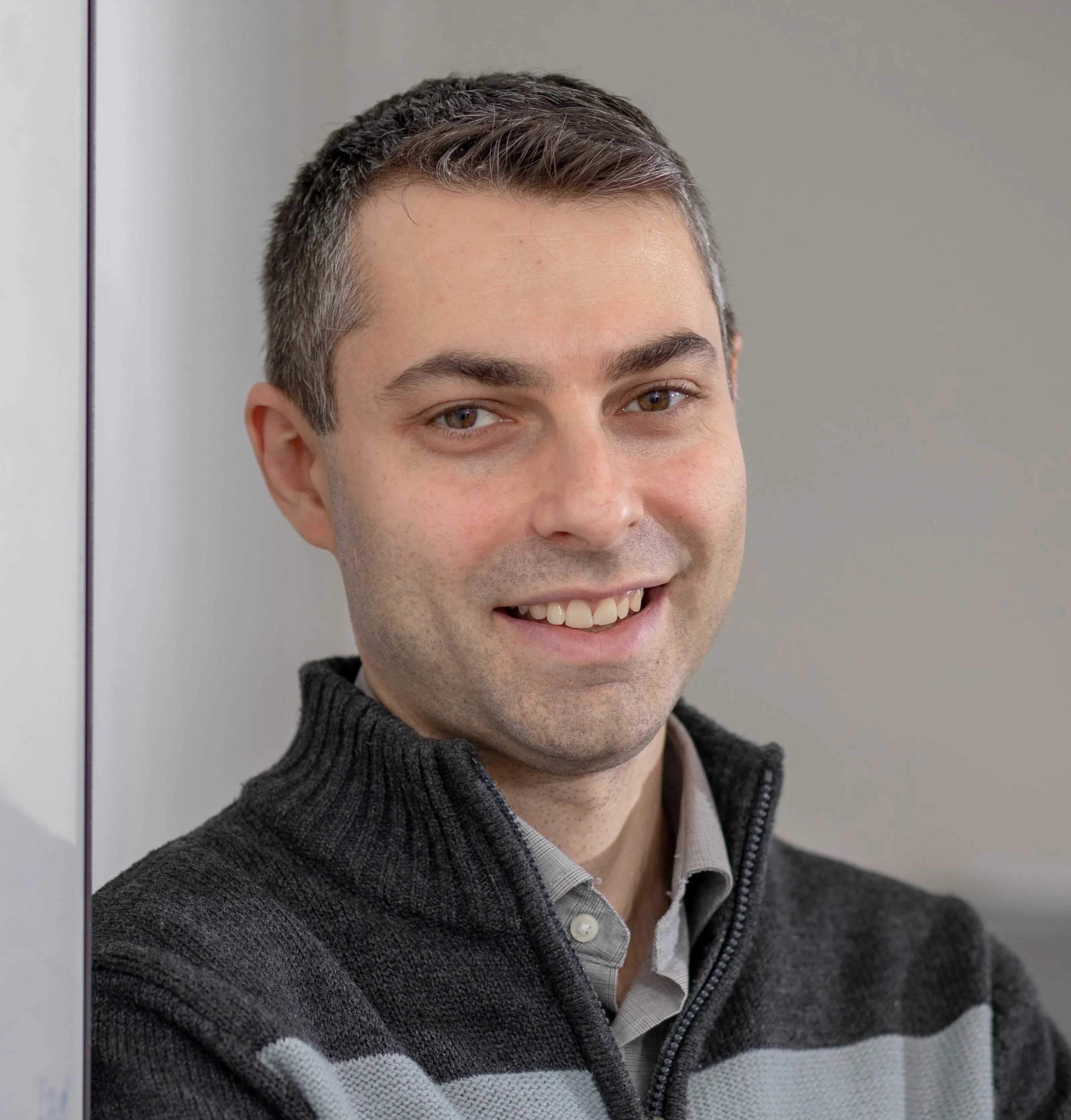
Yuri Grinberg is an Associate Research Officer in Digital Technologies Research Center, National Research Council of Canada (NRC). He obtained his PhD degree in Computer Science from McGill University in 2014, focusing on theoretical and applied artificial intelligence and machine learning, and held an NSERC Postdoctoral Fellow position in Ottawa Hospital Research Institute until 2015.
His current research interests are development and use of machine learning methods to address problems and advance state-of-the-art in physics and engineering. In particular, in the last four years he has been primarily involved in the use of AI in design of photonic components. He has been the scientific lead of AI-Assisted Photonic Components Design theme within the NRC-developed AI for Design Challenge Program since its inception in 2019. He has coauthored over 40 peer reviewed articles and given numerous invited talks.
2022 Summer School – Seth Hubbard
July 19, 2022, 4 p.m.
Novel approaches to photovoltaic and photonic power conversion
There is an ever-growing demand for increased power and sophistication in the satellite systems orbiting our planet, driven in part by increasing reliance on high speed communication and data links. Photovoltaics conversion is one avenue that can be explored to meet these challenges, in space as well as terrestrially, with III-V’s being the most promising materials for very high efficiency devices. This talk will give an overview of PV research at RIT, discussing our quantum well multi-junction approach and specific results using superlattices and various light management schemes. I will also discuss our work on a new type of three-terminal, monolithically integrated device that combines both power generation and optical communication. Our recent results show the capability for either photovoltaic or photonic power conversion (using both GaAs and InP based systems) combined with electroabsorptive modulation of data signals at 1.55 μm for simultaneous free space optical communication and energy production.
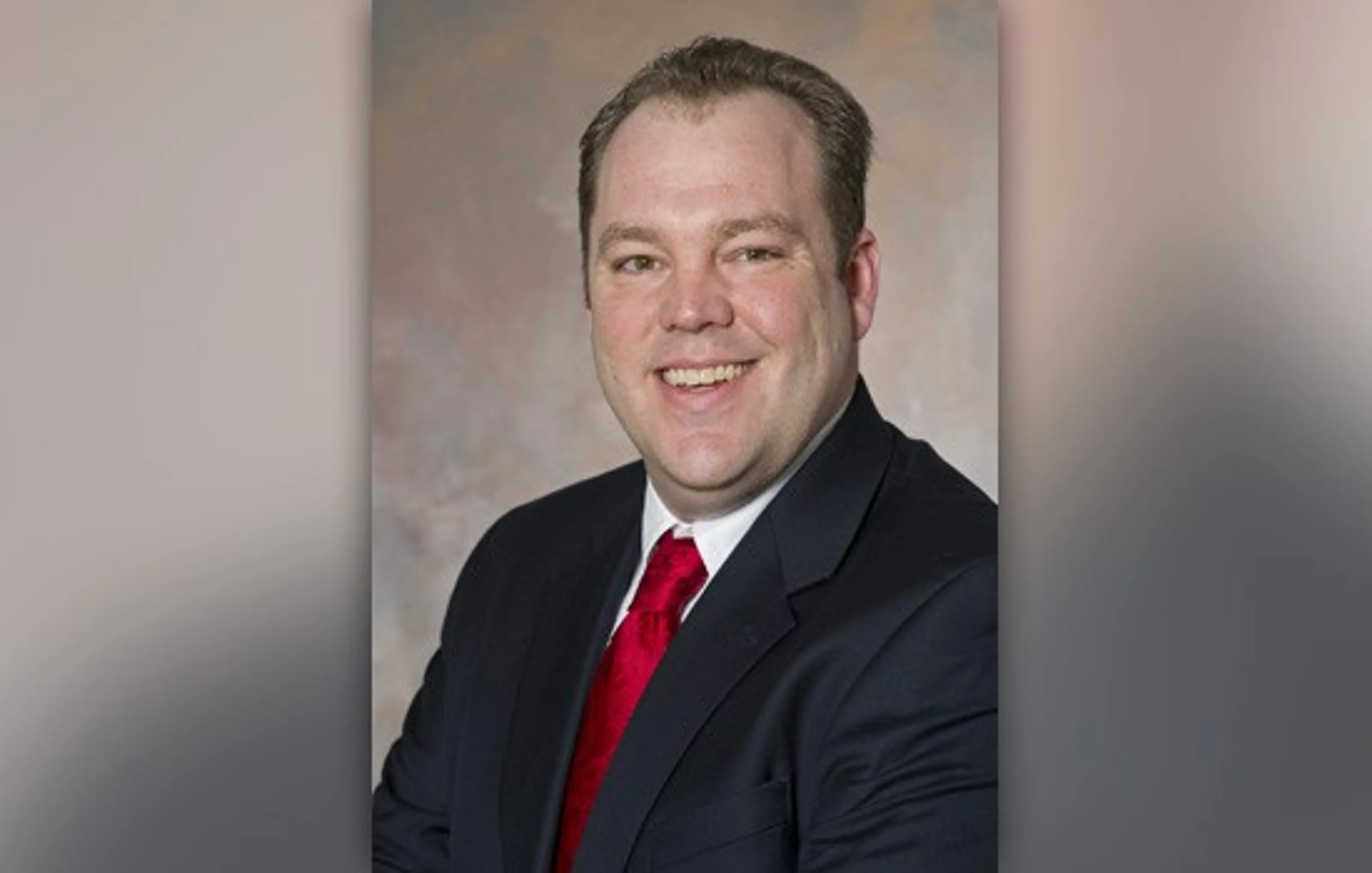
Dr. Seth Hubbard is currently Professor of Physics and Microsystem Engineering at the Rochester Institute of Technology as well as serving as Director of the NanoPower Research Laboratories. He is an expert in III-V materials growth and III-V optoelectronic devices. His team of graduate students and research scientists work on the epitaxial growth, device fabrication and related characterization of various solar and energy harvesting devices. He has authored or co-authored over 200 journal and conference publications on electronic and photovoltaic devices and received an NSF CAREER Award as well as the Rochester Institute of Technology Trustee’s Scholarship Award. Dr. Hubbard serves as an Editor of the IEEE Journal of Photovoltaics and was general chair of the 47th IEEE Photovoltaics Specialists Conference in 2020. Dr. Hubbard received his Ph.D. in Electrical Engineering from The University of Michigan Ann Arbor studying high power GaN and AlGaN heterojunction field effect transistors.
2022 Summer School – Strategic Thinking
July 20, 2022, 9 a.m. to 4 p.m.
TOP-SET trainees only. In-person. Limited seats.
In today’s dynamic and highly complex global economy, it is critically important for policy leaders to be strategic thinkers, an increasingly valued competency for senior managers in business as well as in government. Whether the objective is to introduce a new product line or develop a new policy direction, decision makers or managers supporting the decision-making process must be able to systematically identify the goals, emerging opportunities, and possible obstacles.
This course aims to guide students through a disciplined process to help a business or organization plan for and make transitions, and ultimately to devise the best course of actions. You will also gain a better insight into your own strategic thinking skills – are they up to par or could they use some enhancement?
Topics
What is Strategic Thinking?
Why is Strategic Thinking important?
Essential Traits of a Strategic Thinker
Essential success factors
Self-assessment – Faults or pitfalls to avoid – How to enhance personal strategic thinking abilities?
Step-by-step Strategic Thinking Process – Ensuring appropriate initial conditions are in place – Exploring feasible options – Description of potential methods – Devising tactics that contribute to successful outcomes – Performance evaluation
Practical exercises that illustrate the key concepts
Audience
Anyone who has responsibility for the development of strategic plans and policies to address the goals and objectives of a business or organization. Appropriate for participants who are relatively new to the work world, as well as for seasoned staff who wish to improve or refresh their strategic thinking skills.
Instructor
Bernard Gauthier, PhD’s background includes 35 years of communication work with clients, including the Government of Canada, national associations and private sector organizations. He has also trained hundreds of clients in different aspects of communication. Bernard researched and developed numerous strategic communication plans working with one of Canada’s top PR agencies, allowing him to develop the CARE Model, which became the basis for his 2018 book Strategic Communication in Canada. Bernard has taught at Carleton University and the Bachelor of Public Relations program at Conestoga College.
All activities were held in person at the University of Ottawa with several activities offered in a bimodal format.
Email: sunlabadmin@uottawa.ca
Phone: 613-562-5800x7217
Address: SUNLAB, Advanced Research Complex, room 309,
University of Ottawa, 25 Templeton Street, Ottawa ON K1N 6N5